elvex Launches New Enterprise AI Platform Built to Solve What Claude and ChatGPT Ignore

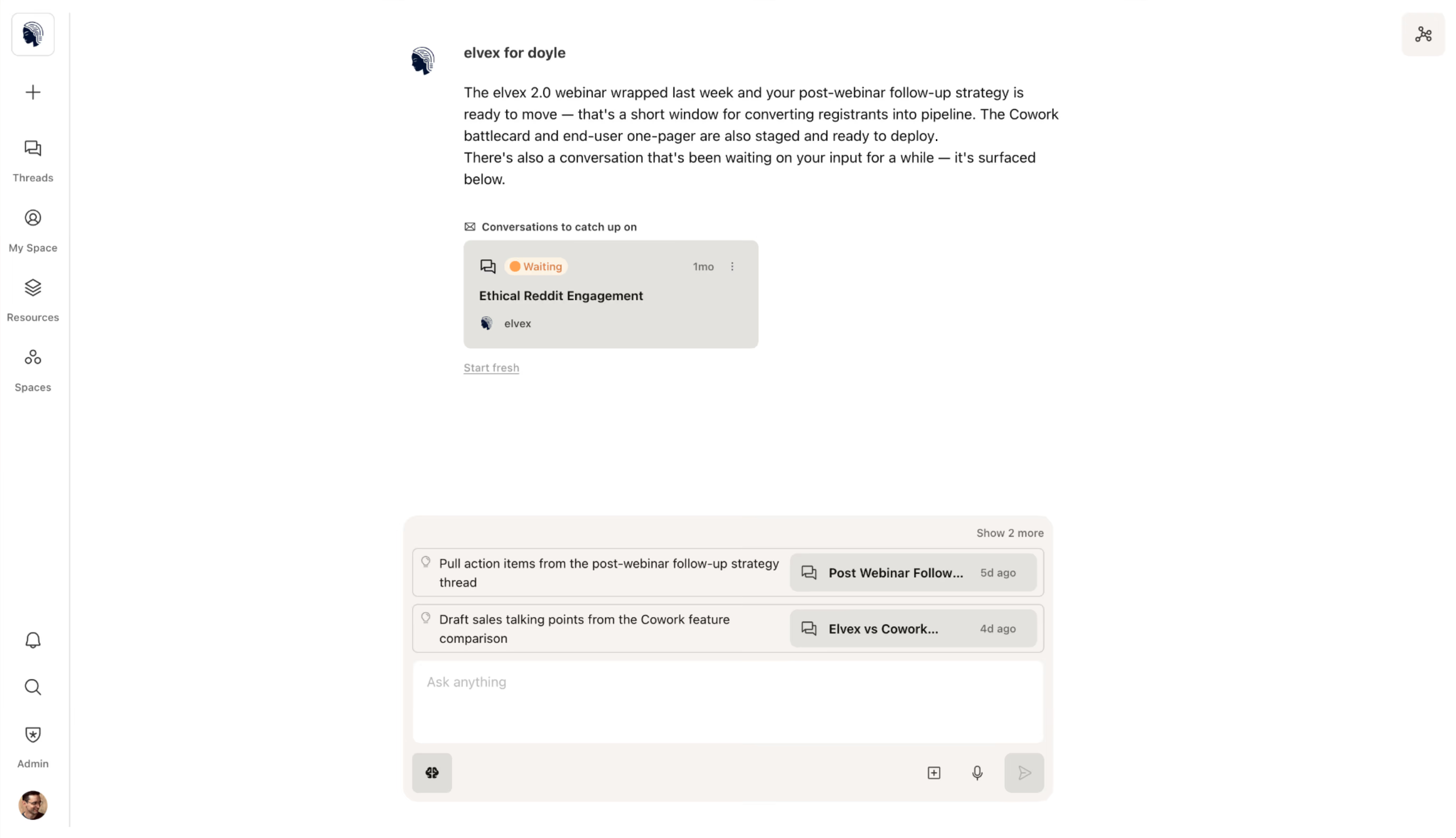
Introduces proactive system-driven approach designed to eliminate the cognitive burden (the “blank chat box”) of using AI and drive organization-wide transformation
SAN FRANCISCO, CA — April 22, 2026 — elvex, the enterprise AI agent platform, today announced the launch of elvex 2.0, a fundamentally new system architecture designed to fix the defining constraint of the current AI cycle: the blank chat box.
Today’s leading AI platforms—including offerings from Microsoft, OpenAI, and Anthropic—are largely built around the blank chat box, an interface that requires users to initiate and drive every interaction. This works well for technical users but breaks down across the rest of the organization. The gap, according to elvex, is not capability but the cognitive load. Today’s systems require users to know what to ask, how to ask it, and how to apply the output, placing an ongoing cognitive burden on the individual.
It’s no surprise that usage inside organizations has largely stalled at the 10–15% of employees that are developers and other technical employees. But what’s right for technology teams does not map to what’s going to work for the rest of the organization. While many companies report widespread adoption of AI tools, most employees use them only intermittently—and continue to work largely as they did before.
elvex argues this is not a limitation of model capability, but a failure of system design.
“Enterprise AI today is individualistic and reactive, not collaborative and proactive,” said Sachin Kamdar, founder and CEO of elvex. “We’ve built extraordinarily powerful systems that assume the user knows what to ask, when to ask it, and how to interpret the output. That works for a small group of technical users. It breaks everywhere else.”
While many organizations have technically adopted AI, elvex argues that adoption alone is a misleading metric. “Adoption is not the issue here. Company-wide transformation is,” Kamdar said. “The question isn’t whether employees have access to AI but whether their day-to-day work actually changes as a result.”
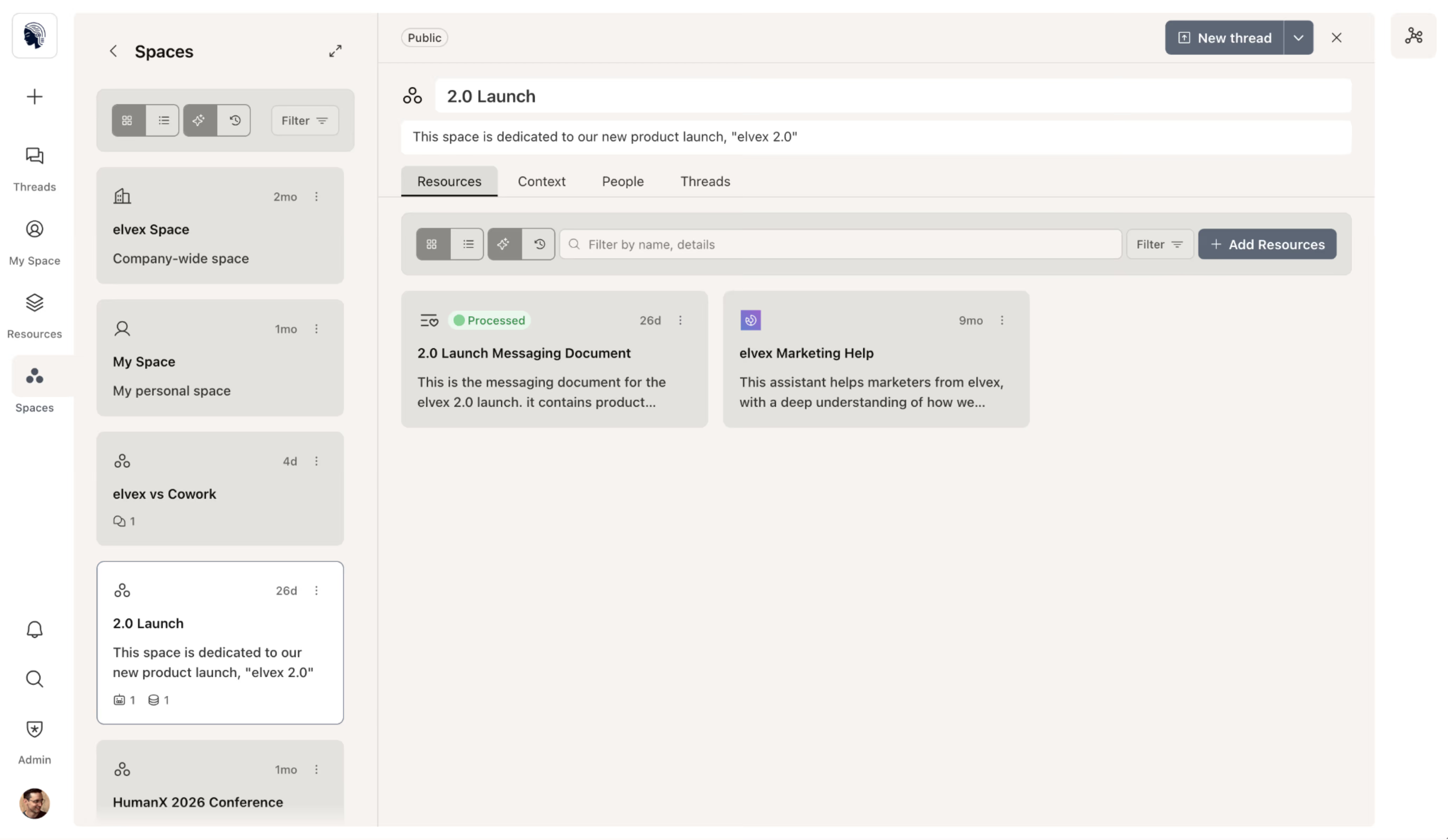
elvex 2.0 introduces a fundamentally different architecture.
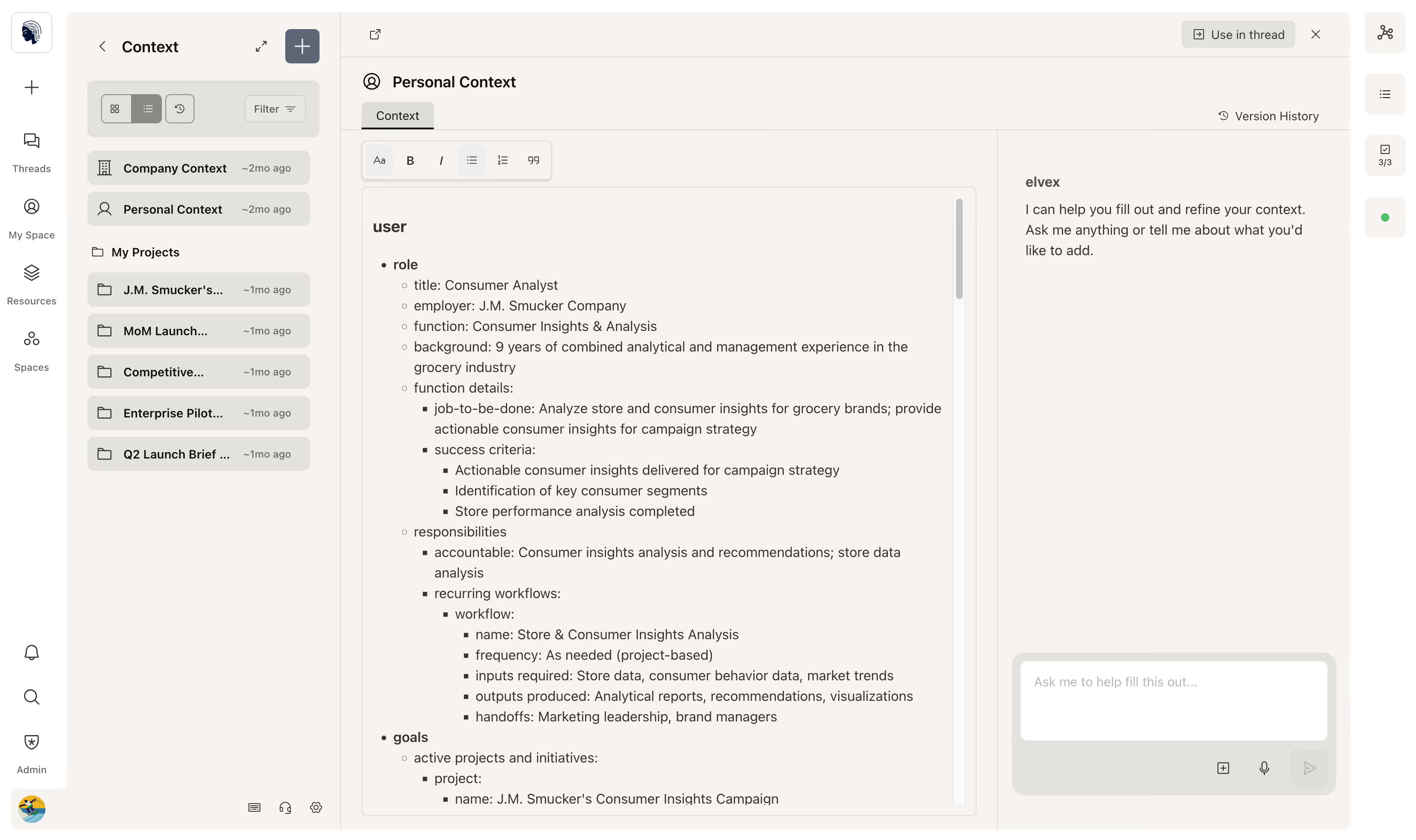
The platform organizes work around shared, persistent environments called “Spaces,” where employees, AI agents, and company data operate within a unified, continuously evolving context. Rather than relying solely on users to initiate interactions, elvex actively surfaces prompts, workflows, and recommendations, while coordinating activity across systems in the background.
This shift is structural: from a blank chat box requiring users to drive all interaction, to a context-driven system that knows everything about your work and the latest capabilities of AI, and connects the dots between them.
By consistently approaching the user with more and more advanced ways of using AI in their work, elvex reduces the cognitive burden involved in becoming "good at using AI," making it possible to move from surface-level usage to true organizational transformation.
In early enterprise deployments, elvex reports significantly deeper and more sustained engagement relative to industry benchmarks. Customers including Movable Ink, Hallmark Health Care, and The Boston Globe have demonstrated broad internal usage alongside measurable changes in how teams integrate AI into daily workflows.
In one deployment, an organization rolled out elvex company-wide within eight weeks, after failing to scale Microsoft Copilot beyond a limited user base. In another, a customer reduced AI-related costs by 50% while increasing overall system usage, driven by more efficient, system-guided interaction.
“What’s breaking right now isn’t demand for AI whatsoever. The demand is there. What breaks is the interface between the technology and the organization,” said Ken Romano, SVP of Product at Stacker. “elvex changes that interface. It makes AI usable at the level where work actually happens.”
The launch comes at a critical inflection point for enterprise AI. While vendors continue to advance model performance and embed AI into existing software stacks, many organizations are struggling to translate those capabilities into sustained, organization-wide transformation for all employees.
The company’s thesis is clear: your AI platform should be pro-active, work with any model, any integration, and for any employee—all under the governance and security requirements that lets enterprises move faster with AI.
“The first phase of AI proved the capability of the models,” Kamdar said. “The next phase will determine whether they can actually be used: reliably, repeatably, and at scale. The companies that win will be the ones that enable all employees to fundamentally change how work gets done.”
/
About elvex
elvex is the enterprise agent platform designed to solve the approachability gap that limits the impact of artificial intelligence inside organizations.
Rather than relying on individual users to drive interaction, elvex proactively prompts users via a context-driven system that knows everything about your work and the latest capabilities of AI, connecting the dots between them.
By shifting from empty chat boxes for individuals to company-wide context-driven orchestration, elvex allows organizations to deploy AI in a way that is usable, scalable, and aligned with how work actually gets done. The platform is model-, integration-, and use-case agnostic, leveraging enterprise-grade controls including permissions, analytics, and cost management.
For more information, visit https://www.elvex.com
Media Contact: Alex Gabriel, alex@rally-ai.com

Related posts
.avif)
.avif)
.png)
Transform your workflows today
Learn how we can help you modernize your business.